

Retaining Wall Installation in Birmingham, AL
WHAT WE DO
Under residential building code, a retaining wall taller than 4 feet, measured from the bottom of the footing to the top, generally needs a permit and an engineered design before construction starts. Greenfront Lawn & Landscape handles retaining wall installation in Birmingham, AL with that level of care on every project, excavating to firm subsoil, compacting a crushed stone base, setting segmental block or natural stone courses true, and backfilling with washed drainage aggregate around a perforated pipe. The result is a wall that holds soil in place, creates flat planting or patio space, and controls runoff across sloped residential and commercial properties.
WHERE WE BUILD
Hillsides, Clay Banks, and Stubborn Backyard Grades
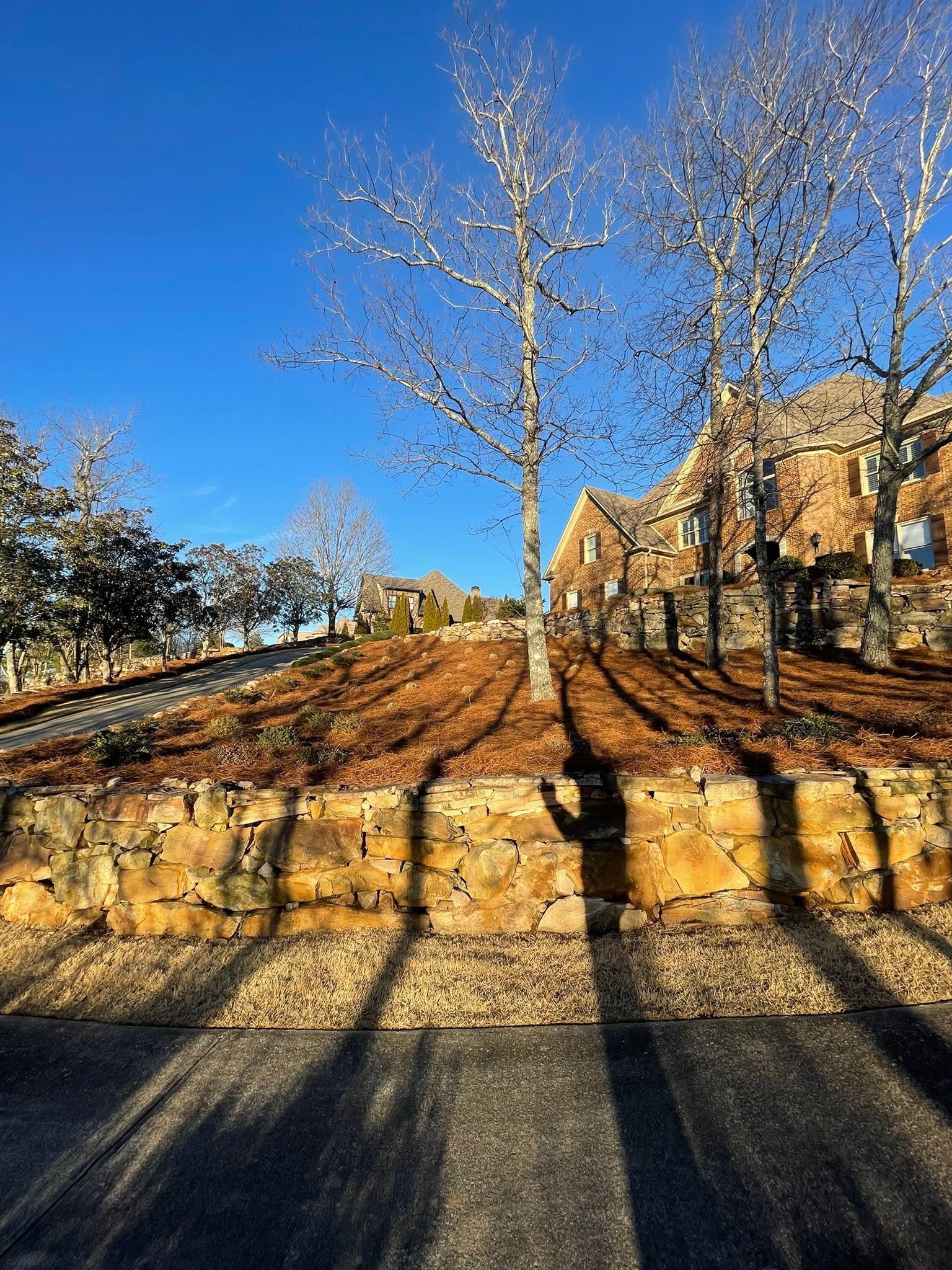
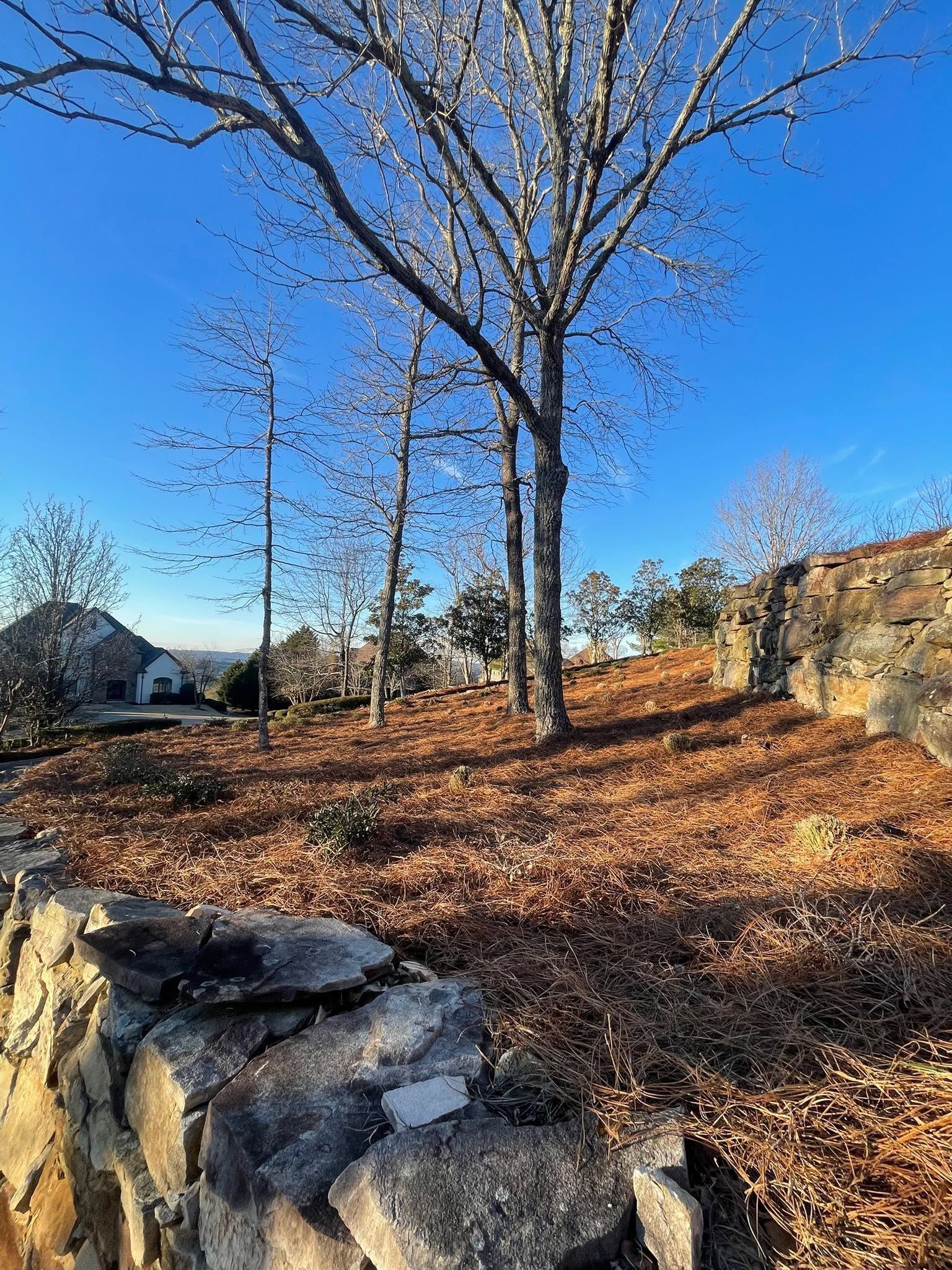
Much of the Birmingham area sits on rolling ridges, and that terrain makes retaining walls a practical necessity rather than a luxury. Hillside homes in Vestavia Hills and Mountain Brook often need walls to carve out flat yards, while Homewood and Hoover properties use them to stop erosion along driveways and property lines. Local red clay holds water and swells, so drainage behind every wall matters as much as the stone in front. We also build walls for commercial sites, parking areas, and shared community entrances.
Retaining Wall Solutions for Every Kind of Slope
Every sloped property presents a different challenge, from gentle garden terraces to taller walls that hold back driveways. These are the retaining wall services owners request from us most often.
01
Segmental Block Retaining Walls
Interlocking concrete block systems are the most popular choice for residential walls. Each course locks into the one below, often with a slight setback toward the slope, creating a strong, uniform face available in many colors and textures to match your home.
02
Natural Stone Walls
Fieldstone and cut stone give walls a timeless, organic look that blends naturally into wooded, hilly settings. We select and fit each piece for stability and appearance, building walls that feel like they have always belonged in the landscape.
03
Tiered Garden Walls
Breaking one tall grade into two or more shorter walls creates layered planting beds and softens the look of a steep slope. Terracing also spreads soil pressure across several structures, which can simplify construction on challenging hillside lots.
04
Retaining Wall Drainage
Water pressure behind a wall is the biggest threat to its lifespan. Our crew installs clean gravel backfill, perforated drain pipe at the base, and filter fabric where needed, giving groundwater a route out instead of pushing against the stone.
05
Wall Repair and Rebuilding
Leaning, bulging, or collapsing sections usually signal drainage or base problems. After assessing the cause, we dismantle damaged areas, correct the foundation and backfill, and rebuild using sound methods so the same failure does not return after the next storm.
06
Seat Walls and Planter Walls
Shorter freestanding walls add structure and seating to patios, fire pit areas, and garden beds. Built from matching block or stone with finished caps, they create raised planting spaces and gathering spots that tie your outdoor areas together.
TESTIMONIALS
What Our Customers Say
How We Build a Retaining Wall That Stays Put
A lasting wall depends on steps that happen long before the first block is set. Here is the exact sequence our crew follows on every retaining wall installation we take on.
01
Site Evaluation and Layout
We start by studying the slope, soil type, drainage patterns, and how much height the wall must hold. From there we mark the layout, confirm property lines, and determine whether the design needs a permit or engineered plans.
02
Utility Locating
Before any digging, we submit a locate request to Alabama 811, which calls for notice between 2 and 10 full working days ahead of excavation. Utility owners then mark underground lines, protecting your property and our crew from dangerous surprises.
03
Excavation and Base Preparation
Excavation continues below grade to firm soil, then filled with crushed stone compacted in layers. This base spreads the weight of the wall evenly and keeps it from settling, making it the most important step in the entire process.
04
Setting the First Course
The bottom row is buried partly below grade and checked for level along its entire length. Getting this course perfect matters because every block above follows its line, so small errors at the base become obvious flaws at the top.
05
Drainage and Backfill
As each course rises, washed gravel fills the space directly behind the wall, and perforated pipe runs along the base to carry water away. Native soil goes in behind the gravel zone and is compacted to prevent future settling.
06
Capping and Final Grading
Finished caps are secured with masonry adhesive to lock the top course in place. We then grade soil around the wall so surface water flows away from it, clean the site, and review the completed work with you together.
WHO WE ARE
The Parts You Never See Get Our Closest Attention
Most retaining wall failures trace back to what happens below grade: a thin base, skipped compaction, or no path for water to escape. In 3 years of building across central Alabama, we have made those hidden steps our priority, because a straight face means nothing if the wall starts leaning after a wet spring. We contact Alabama 811 before digging, explain each step, and keep the site tidy throughout. Request your personalized quote through our contact page to plan your wall.
Why Choose Greenfront Lawn & Landscape
Made for Your Landscape
01
Lawn Care and Landscaping Together
We provide lawn mowing, trimming, landscape design, and landscape maintenance for residential and commercial properties. Our services help you maintain your yard and plan outdoor improvements with one team.
02
Consistent, Reliable Maintenance
We focus on dependable scheduling and attention to detail to keep your property maintained throughout the year. From routine lawn care to seasonal yard cleanup and leaf removal, we tailor our work to your property’s needs.
03
Outdoor Improvements Beyond the Lawn
We offer retaining walls, hardscaping, irrigation, and landscape lighting to improve the appearance and functionality of your outdoor space. We work with you to understand your priorities and develop solutions suited to your landscape.
04
Serving Birmingham and Nearby Communities
We serve Birmingham, Mountain Brook, Vestavia Hills, Hoover, and surrounding Alabama communities. We approach each lawn care and landscaping project with personal attention, professionalism, and a focus on quality workmanship.
FAQs - Frequently Asked Questions
What is the best material for a retaining wall?
Segmental concrete block offers the best mix of strength, consistency, and value for most residential walls. Natural stone suits wooded or rustic settings, while timber costs less upfront but rots over time and rarely makes sense for walls holding significant soil.
Why do some retaining walls lean or fail?
Poor drainage causes most failures, because saturated soil pushes hard against the back of a wall. Thin or uncompacted bases, missing setback, and walls built taller than their design allows are the other common culprits behind bulging and collapse.
How tall can a retaining wall be before it needs a permit?
Walls over 4 feet, measured from the bottom of the footing, generally require a permit and engineered design. Greenfront Lawn & Landscape confirms rules with the local permitting office for each Birmingham, AL project, since walls supporting driveways or buildings face closer review.
How long does a well-built retaining wall last?
A properly drained segmental block or stone wall can last for decades with minimal upkeep. Lifespan depends far more on the base, backfill, and drainage than on the blocks themselves, which is why installation quality matters so much.
Does every retaining wall need drainage behind it?
Nearly every wall holding back soil benefits from gravel backfill and a drain pipe, and clay soil makes drainage essential. Without a path for water to escape, pressure builds after heavy rain and gradually pushes the wall out of alignment.
Can a retaining wall be built in wet clay soil?
Yes, with the right preparation. Clay needs a deeper, well-compacted gravel base, generous drainage aggregate behind the wall, and filter fabric to keep fine particles from clogging the system, all of which help the structure resist swelling and saturation.
How much of the first course should sit below ground?
Many block manufacturers recommend burying about 10 percent of the wall's total height, with 6 inches as a common practical minimum. That embedment keeps the base from kicking out and gives the wall a solid foothold against sliding.
Can trees or shrubs be planted near the top of a retaining wall?
Small shrubs and perennials usually work well, but large trees add weight and roots that stress the structure. Our team at Greenfront Lawn & Landscape plans planting setbacks on Birmingham, AL walls so roots and wall stay healthy together.
Level Ground Built To Handle Every Heavy Storm
A retaining wall is one of the few landscape features expected to work quietly for decades, holding back tons of soil through every storm. Greenfront Lawn & Landscape builds walls across Birmingham, AL with that responsibility in mind, focusing on compacted bases, careful leveling, and drainage that keeps water pressure from building behind the stone. The payoff goes beyond erosion control, since a well-placed wall can turn an unusable slope into a patio, garden terrace, or play area. If your yard is losing ground or simply wasting space, get in touch through our contact page or online quote form, and we will evaluate the slope and recommend the right approach.